
The inclusion of dietary fats in broiler rations is a common strategy to increase energy density, improve palatability, and enhance growth performance in poultry production. The type and level of fat used can significantly influence feed conversion ratio (FCR) and bird health. Differences between animal and vegetable fat sources, as well as fatty acid composition, play a key role in overall efficiency.
Role of Fat in Broiler Diets
In intensive poultry production, fats serve as a concentrated energy source. Adding appropriate amounts of fat or oil to feed increases metabolizable energy and improves feed texture and palatability. Broilers respond differently to various fat sources, depending on fatty acid composition and digestibility.
As birds age, their ability to digest and utilize fats improves, meaning older birds derive more energy from dietary fat. Therefore, dietary fat levels should be adjusted according to age.
Saturated vs. Unsaturated Fatty Acids
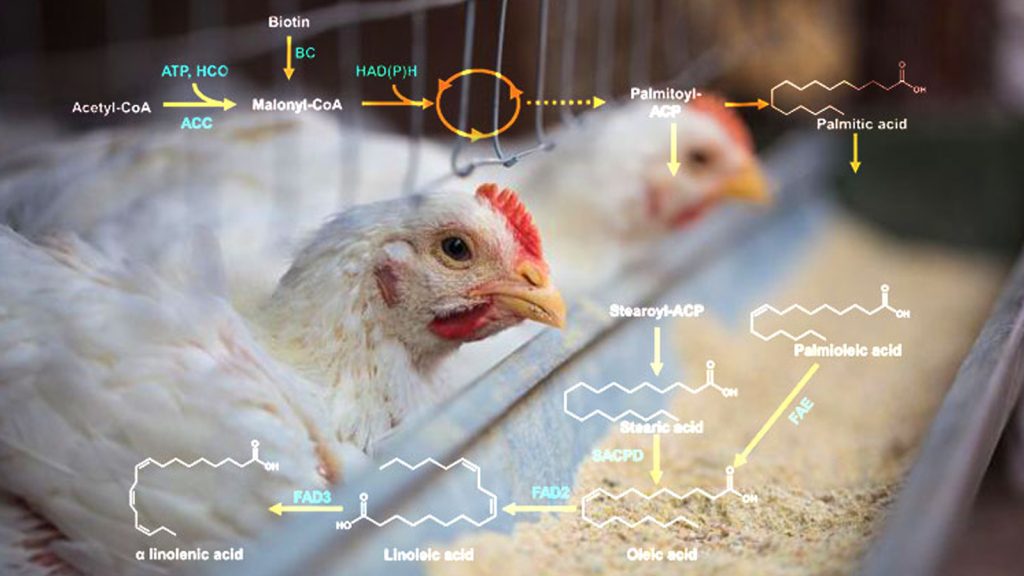
Fats are classified into saturated and unsaturated fatty acids, each with different nutritional properties. Unsaturated fatty acids, mainly found in vegetable oils, have higher digestibility compared to saturated fats. This makes them more effective in improving growth and performance in broiler diets.
Effect of Free Fatty Acids
The presence of free fatty acids in fat sources can reduce nutrient absorption, particularly in young chicks. This effect is more pronounced in saturated fats. Therefore, the quality of fat sources and their free fatty acid content are critical factors in feed formulation.
Advantages of Vegetable Oils
Research indicates that vegetable oils perform better than animal fats such as tallow. One key reason is that vegetable oils stimulate bile secretion more effectively, which improves digestion of unsaturated fatty acids.
Use of Fat Powder in Diets
Fat powder, or calcium salts of fatty acids, is a processed form of dietary fat used in animal and poultry nutrition. These compounds are essentially calcium soaps of fatty acids and are stable under certain conditions.
Fat powder offers advantages such as easier storage, reduced oxidation risk, and improved handling. However, studies suggest that completely replacing vegetable oils with fat powder may reduce growth performance in broilers.
Limitations of Fat Powder
Observed reductions in body weight in some studies may be due to lower digestibility or poor quality of fat powder. In addition, incomplete hydrolysis of these compounds in the digestive tract can limit energy absorption, especially during later growth stages.